

bits and Biomes
Investor Interview Series with Valuence Ventures:
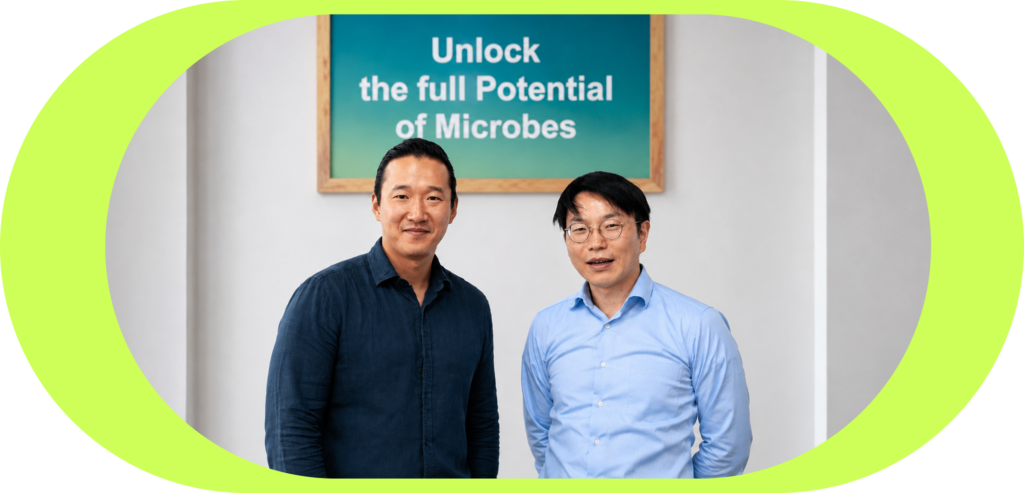
bitBiome sat down with Andrew Hyung, General Partner and Director, from Valuence Ventures to discuss their take on AI x bio, and how important globalization is for a growing company.

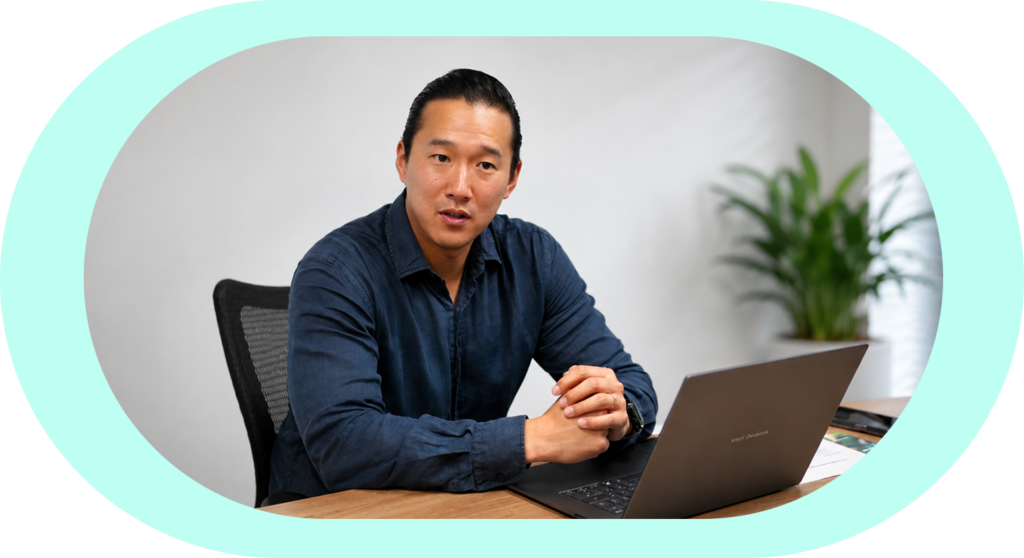
Q: Andrew, we are very honored to receive you in the office today. Can you provide an overview of your valuation and investment thesis?
Andrew: So Valuence Ventures is an early-stage fund investing in pre-seed and Series A.
We back deep-tech founders accelerating progress in clean-tech and techbio. In practice, this means backing companies where the underlying science is genuinely hard and challenging, and where the customer is industrial rather than a consumer.
Q: Deep-tech has many different applications, including AI, biology, clean-tech, etc. Are you personally interested in any particular themes or sectors in deep-tech right now?
Andrew: The theme that we and I keep returning to is the infrastructure layer that lies beneath biology, rather than biology’s end products. Over the past three years, an enormous amount of capital has gone into models—like protein design, enzyme generation, and molecular property prediction. But models themselves do not excite me. Models are getting cheaper, and they are becoming widely available very quickly. The scarcity is not the architecture; it is the infrastructure and the clean data that nobody else is talking about. A model cannot function without a high-quality foundation.
The second theme is industrial decarbonization through biology, rather than purely through electronics. One of the reasons we started looking at bitBiome was not because we were initially excited about molecular biology, but because we were researching biomining. We understood the massive size and potential of the microbial space. That’s why we entered this arena, and we are absolutely thrilled about industrial decarbonization using biology.
Q: Industrial decarbonization is a critical global issue with multiple angles of attack. Under a government-supported initiative, we are currently working on a project to reduce CO2 by identifying novel carbon-utilizing microbes, which could pave the way for major achievements in decarbonization.
Andrew: Absolutely. Japan is leading that, and we are seeing other countries doing the same thing—particularly Korea. That is one of the angles where we hope to bridge the gap, leveraging regulatory pushes and public-private partnerships to help expand bitBiome into Korea and beyond.
Q: You’ve looked closely at Japanese and Korean startups, and before becoming a GP at Valuence, you spent time on Wall Street and other financial centers. Based on your experience, what are the typical characteristics of a successful startup?
Andrew: Yeah, I think this is especially important since we invest in deep-tech. Among a few things:
- The Frontier Team: A technical founder who is genuinely at the frontier of their field, paired with a commercial operator—which is where you come in, Yuji—who can commercialize the technology. It shouldn’t be one person trying to wear too many different hats.
- Unbiased Revenue: Generating revenue from customers who are not strategic investors. bitBiome checkmarks this box beautifully. A customer who is on your cap table doesn’t necessarily send a pure market signal; they might buy because of platform exposure.
- Capital Efficiency as a Habit: We look at capital efficiency as a habit rather than a constraint. Startups that learn to build things with very little money tend to maintain that discipline when they have a lot of it, enabling them to survive the lean years when the capital markets are closed.
Q: Many companies successfully raise a lot of money, but they aren’t always successful at converting that capital into revenue-generating platforms or products. Based on your view, how do you evaluate the Japanese deep-tech startup ecosystem overall? I know this is your first investment in a Japanese startup, but you have evaluated many companies here and work with Japanese advisors.
Andrew: Yes. It’s perhaps a little unfair because we happened to choose the best company in Japan with bitBiome! But it is a well-known understanding that Japan produces first-rate science. Historically, however, that science has been commercialized purely domestically.
To me, that global leap is still an exception in Japan. That is where we concentrate our diligence: yes, the science is the bare minimum we must verify, but can this company commercialize globally? Can they sell outside of Japan?
The second factor I look at is capital structure. Japanese deep-tech has access to government funding at a scale that startups in almost no other country can match. When leveraged well, non-dilutive government grants buy years of crucial development time without diluting the founders. But when used poorly, it produces “grant-optimized” companies that are built to win government proposals rather than secure real customers. bitBiome has done an exceptional job converting its grants into commercially viable technology.
Q: Let’s talk about how you first learned about bitBiome. When did we first come on your radar?
Andrew: This is largely thanks to Yamamoto-san at UMI. We were introduced back in March 2025. UMI has been an investor in bitBiome for several years and knew we were looking at the data layers beneath biomanufacturing. I was introduced to you, Yuji, over Zoom that month, and we met the team in Tokyo in May 2025.
It took us exactly 12 months to finalize our diligence and make our investment commitment. Twelve months is a long diligence process for a seed extension round. But we weren’t agonizing over it; we were monitoring the questions we wanted answers to. It wasn’t about the science itself, but about watching the commercial engine begin to compound.
Q: A 12-month diligence process is indeed thorough, but it was a very positive matching process for both sides to see how we can mutually add value. You’ve been very generous with your time, which we highly appreciate. You mentioned your investment criteria; what made bitBiome stand out from other companies?
Andrew: Yeah. I think you may have used this analogy before—the Lego analogy. Imagine emptying 10 or 20 different Lego sets into a single bin, throwing away the boxes, and discarding the instruction manuals. That is what metagenomics does. You get all of these fragmented genomic pieces that you have to put back together without instructions. You might build something that looks like a finished model, but pieces from other sets are mixed in, and you can’t confidently tell which is which.
Your single-cell sequencing (bit-MAP®) keeps everything in its own box. Because bitBiome physically isolates individual microbial cells before sequencing, every genetic piece you recover is guaranteed to come from the exact same organism. The label is printed on the box.
The second major difference is that bitBiome builds its own capabilities rather than renting them. The cell isolation chemistry, the sequencing, the database, and the AI modeling all sit under one roof. That matters more than it sounds. The wet lab is not just a place where you test what an AI model proposes—the wet lab is where the proprietary data originates in the first place. If you outsource that, you have outsourced your core competitive advantage.

Q: Many companies in this era of “AI for biology” are looking at bitBiome’s technology and team. What convinced you that our AI opportunity is unique?
Andrew: Most “AI for biology” companies are model-centric companies renting public data. They compete on architecture and talent in a field where both are becoming highly commoditized. They are all drinking from the same public sequence databases, which are heavily skewed toward a small number of well-studied, culturable organisms.
To me, a model is something a well-funded team can build in 18 months. But the database is the unfair advantage—the ultimate asymmetry. bitBiome owns a proprietary training set where roughly 50% of the sequences are entirely novel compared to public databases, drawn largely from uncultivated environmental sources, and growing by over a billion sequences a year.
Your machine learning models are excellent, but if someone took your model tomorrow, you could easily rebuild it because the model is not the end product. The moat is the database and the proprietary single-cell data behind it. We aren’t looking for who has the flashiest model; we are looking for who has the cleanest, most reliable data.
Q: Yes, our platform allows us to collect a massive amount of high-quality data while simultaneously building out a physical product pipeline. How do you view our positioning as a platform company compared to single-product pipeline companies?
Andrew: Everyone loves the word “platform.” Even many of our portfolio companies claim to be “platform” businesses. I approach that term with skepticism as a rule. “Platform” is often used as a way to avoid the discipline of making a choice. The graveyard of biotechnology is full of platform companies that could theoretically address every market, but commercially ended up addressing none because they got distracted.
The test I apply to platforms is simple: Are non-investor third parties already paying for the platform’s output, and do they keep coming back? If the answer is yes, you have a true platform. If the answer is just a pipeline of unpaid pilots, then you have a research program with a business plan attached to it.
bitBiome passes this test in a very specific way. Your platform sells in three distinct streams to three different buyers: sequencing services, database access, and custom contract engineering. The same underlying asset serves all three, diversifying your revenue.
Q: During your due diligence, you asked highly rigorous technical and business questions, and conducted third-party interviews. What was the ultimate trigger that tipped you toward investing?
Andrew: Initially, it was our scientific interest in single-cell sequencing. But what truly separated bitBiome was something that wasn’t even being actively marketed: Almost every genome bitBiome produces carries a physical marker gene telling you exactly which host organism it came from. In assembled metagenomic genomes (MAGs), that marker is effectively lost.
Completeness is an assembly problem, and assembly is a software challenge that improves every year. But taxonomic attribution is a physical consequence of sample handling before a computer is ever involved. You either physically isolated the single cell before sequencing, or you did not.
Every serious conversation in biological AI eventually arrives at the same bottleneck: it isn’t a shortage of computing power, talent, or algorithms. It is a shortage of clean, attributable data that someone owns. You have spent nearly a decade building this attributable dataset, and it was not being fully valued by the market. That is what tipped us in.
Q: Were there any risks or developmental needs you observed during diligence, and what helped convince you that they are manageable?
Andrew: That is a great question. One area we spent a lot of time on diligence and derisking was the transition from selling services to selling products. Service revenue is real revenue, but it scales linearly with headcount. Product and database licensing revenue is what makes a TechBio platform exponentially valuable, and that transition is genuinely difficult.
I got comfortable with this because bitBiome does not have to immediately succeed at product licensing to survive. Your service and sequencing revenue is already substantial and close to sustaining the business on its own. But we are venture-backed, and we want to see that massive upside. You have successfully proven that this platform can deliver end-to-end enzyme engineering.
The second factor is your data durability. The fact that your clients are repeatedly coming back for additional projects speaks volumes about your customer retention and your data as a competitive moat.
Q: That is a vital point. If we only focused on services, we could be a profitable business, but it would be linear growth. We want to capture the exponential upside of synthetic biology by taking calculated risks on scalable product and data-licensing opportunities to fully unlock the potential of the microbial world.

Q: You also met with several of our team members. What makes bitBiome’s team and culture different from other deep-tech companies you’ve evaluated?
Andrew: Meeting the team was incredibly helpful to understand the culture. Dr. Masahito Hosokawa is a genuine frontier scientist; his publication record is deep, and his single-cell methods are highly validated. The fact that he still holds his academic research position at Waseda University keeps the company directly connected to the cutting-edge of the field.
But what stood out most was your leadership style, Yuji. It’s a small detail, but it meant a lot to me: In meetings, you have never once interrupted your colleagues. When someone on your team is answering a technical or business question, you let them finish and let their answer stand. You aren’t waiting for a gap in the conversation just to look smart or add an extra detail.
In fundraising, many CEOs try to over-explain or dominate the room. Your approach is the testament of a technical organization where ownership is truly distributed. You cannot run a wet lab, a bioinformatics group, and an AI modeling team under one person’s centralized judgment. The culture has to push decisions outward, and how a CEO behaves in a room full of investors tells you reliably whether a company actually does that.
Q: I appreciate that observation. Applied synthetic biology and industrial decarbonization are highly interdisciplinary challenges that require sequencing, bioinformatics, AI, and scaled fermentation. No single person can handedly cover the entire domain, so distributing decision-making is critical to our speed.
For investors, the question of “Why now?” is always top of mind. What makes you convinced that this is the right moment for bitBiome to scale up and raise capital?
Andrew: First is the sheer proliferation of AI models. Models have become abundant and commoditized, which naturally reprices the value of unique training data upward. Data is the new gold.
Second, industrial buyers are moving synthetic biology away from the “innovation and curiosity” teams into actual commercial procurement. This shift is being driven by concrete input costs, supply chain security, and carbon commitments.
Third, supply chain scrutiny means that biological data and service provenance is now a procurement requirement rather than a philosophical question. bitBiome sits at the intersection of all three of these trends, and unlike most pre-revenue Bio-AI startups, you have validated science and recurring, paying enterprise customers.

Q: Looking to the future, where do you see bitBiome in 5 to 10 years, and how will your presence as an investor help us scale?
Andrew: In 5 to 10 years, on the data side, I expect bitBiome to become the absolute reference source for organism-attributed microbial sequence data. Think of it as the “Wikipedia of the microbial world.” Before starting any industrial biology program, bitBiome’s database should be the very first thing researchers check. Starting a biomanufacturing project without bit-GEM should feel like flying completely blind.
On the geographical side, while you are predominantly Japanese today with a growing international pipeline, in five years, the majority of your revenue should ideally sit outside of Japan.
In the US, there are many heavily capitalized, AI-native biology companies. They have raised enormous sums of money, but their models are trained on public metagenomic data. They desperately need clean, attributable, proprietary data—and there is no way for them to simply compute their way out of a data shortage. bitBiome is one of a very small number of companies globally that possesses this data.
Q: You are completely right. Global expansion, particularly outside of Japan, is our highest commercial priority, and we want to see at least half of our revenue driven by international partnerships. What is your advice for other Japanese deep-tech startups looking to expand globally?
Andrew: You are already doing the hardest part: building the technology, running the automated labs, and winning real customers. What global investors on your cap table can do is shorten the commercial distance. bitBiome is headquartered in Tokyo, but your buyers are in Seoul, San Francisco, and Boston. We can bridge that geographic and cultural distance to secure those meetings.
For Japanese deep-tech companies, the key is distributing ownership while keeping the team truly global. You cannot expect a purely domestic Japanese team to understand Western corporate culture and win major international mandates, just as you can’t expect US companies to succeed in Japan using purely American methods. You must hire local talent, trust them, and distribute that responsibility. That is what bitBiome is doing successfully.
Q: We are currently recruiting more top-tier global scientists. Do you have a few words for future talents who might be considering applying to bitBiome?
Andrew: You are building something truly remarkable here. The world used to look at synthetic biology as a distant hope or a science project. Now, we are seeing massive corporate adoption and regulatory pushes. bitBiome sits at the absolute frontier of this transition. This is not a domestic Japanese problem or an Indian problem; this is a global challenge, and bitBiome is tackling it with global science. Come be a part of this revolution.
Q: Indeed, while our R&D center of excellence is in Tokyo, our clients, partners, and impact are entirely global. Some people say it is incredibly hard for deep-tech companies with cutting-edge technology to maintain a cohesive company culture as they scale globally. What is your take on that?
Andrew: What helps is having a unified vision and clear guidance, but giving everyone true ownership rather than just forcing them to follow instructions. Culture is not something that is strictly top-down or bottom-up; it is something that every single employee actively contributes to.
In deep-tech, the cycle is challenging because you are building something complex before anyone buys it. The physical validation loop is tough. But having a global team with a shared value system and a clear vision is what makes the culture incredibly strong and central to what you are trying to build.
Q: Do you think there are major structural differences between small biotech startups and large pharmaceutical organizations?
Andrew: Yes, absolutely. We are seeing more and more innovation shift to startups because researchers want a distributed, entrepreneurial environment where they are contributing to something they personally believe in. Large organizations are highly process-oriented and risk-averse; failure is often not tolerated, which kills innovation. But in a startup, failure is not a career-ender—it is just one of the necessary learning steps on the path to a breakthrough.That entrepreneurial spirit is exactly what is required to tap into the uncultured microbial dark matter and build the future of biomanufacturing.

Q: Let’s close with a quick lightning round. One word to describe bitBiome?
Andrew: I keep coming back to “Attribution.” It has to be attribution.
It is “Conversion.” Converting raw biological data into real-world manufacturing performance.
What is bitBiome’s greatest strength?
Andrew: The team’s “Discipline.” That is the foundation of your capital efficiency.
Q: What will surprise people most about bitBiome?
Andrew: The fact that your customers are not only paying you, but their projects are actively helping you compound your proprietary data moat every single day.
Q: Thank you very much, Andrew. This was an exceptional discussion.
Andrew: Thank you.